People confuse these two things constantly. And the confusion costs them — either they avoid fractional ownership because they think it's a timeshare in a nicer jacket, or they buy a timeshare thinking they're getting real ownership. Both mistakes are expensive.
Let's clear this up. Permanently.
The Fundamental Difference
A timeshare gives you the right to use a property. Fractional ownership gives you actual ownership of a property.
That distinction sounds simple. It changes everything.
When you buy a timeshare, you're purchasing a license — the right to occupy a unit (often not even a specific unit) for a set period each year. You don't own the real estate. You can't build equity. You can't sell it on your terms. In most cases, you can't even give it away.
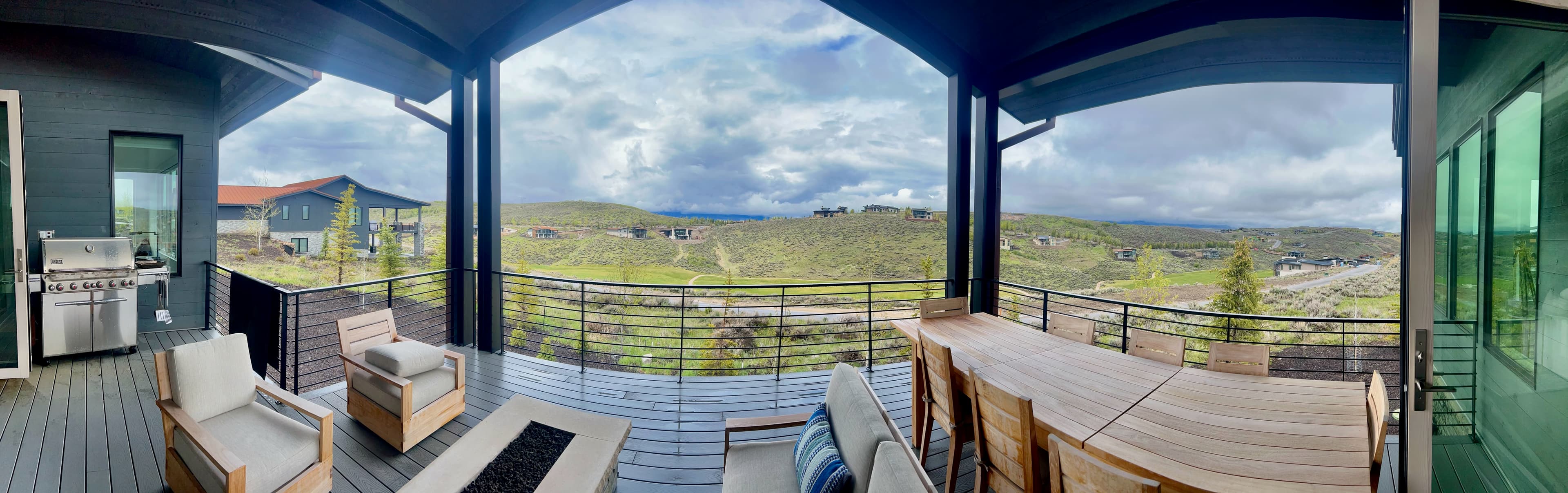
When you buy a fractional share through GoForth, you're purchasing deeded real estate held in an LLC. Your name is on the title. You own 25% of a specific, luxury home. It appreciates when the market goes up. You can sell your share when you want to. You have a real asset on your balance sheet.
The Head-to-Head Comparison
Here's what the difference looks like in practice:
| Fractional Ownership (GoForth) | Timeshare | |
|---|---|---|
| What you own | Deeded real estate (1/4 share via LLC) | Right-to-use license |
| Number of owners | 4 families | 52+ (one per week, sometimes more) |
| Annual access | ~12 weeks | 1-2 weeks |
| Property type | Specific luxury home ($1M-$10M+) | Unit in a resort complex |
| Equity | Yes — real asset that appreciates | No equity. Depreciates immediately |
| Resale value | Market-rate (often with appreciation) | Loses 50-90% of value instantly |
| Exit | Guaranteed — sell anytime | Extremely difficult; resale market is toxic |
| Management fees | Transparent, shared 4 ways | Escalating, opaque, often abusive |
| Rental income | Yes — earn on unused weeks | Rarely, and usually restricted |
| Personalization | Your belongings, your space | Standardized resort room |
| Tax benefits | Property tax deduction, depreciation | Minimal to none |
Read that table again. These are not two versions of the same thing. They're fundamentally different financial instruments.
The Equity Question
This is where the gap becomes a canyon.
A $4M vacation home, purchased as a 1/4 interest through GoForth, costs approximately $1M. If the property appreciates 4% annually — conservative for the markets we operate in (Marbella, Scottsdale, Deer Valley, 30A, Turks & Caicos) — your share is worth roughly $1.22M after five years. You've built $220K in equity while vacationing in a home you love.
A timeshare purchased for $25,000 is worth approximately $2,500-$5,000 the moment you sign the contract. Five years later, after paying $5,000-$8,000 per year in maintenance fees, you've spent $50,000-$65,000 total. Your "asset" is worth less than you paid in fees for a single year.
One is an investment. The other is an expense that pretends to be an investment.
The Access Reality
A timeshare gives you one week. Maybe two if you bought a premium package. One week per year in a property that doesn't feel like yours, surrounded by hundreds of other owners you'll never meet.
GoForth gives you approximately 12 weeks per year. Twelve. That's enough for summer, Thanksgiving, Christmas, spring break, and still have weeks left for the spontaneous long weekends that become your best memories. You share with three other families — not fifty-two. You know them. Your kids know their kids.
And the weeks you don't use? They generate rental income. Your home works for you even when you're not in it.
The Exit Trap
Ask anyone who's tried to exit a timeshare. Go ahead. You'll hear the same story every time.
The timeshare resale market is so broken that an entire industry exists solely to help people escape their contracts — often at a cost of $5,000-$15,000 on top of what they've already lost. The American Resort Development Association's own data shows that timeshare resale values average 50-90% below original purchase price. Some owners literally cannot give their timeshares away.
GoForth's exit guarantee exists because it doesn't need to be complicated. You own real property. Real property has real value. When you're ready to sell, we facilitate the sale of your LLC share at fair market value. No escape companies. No attorney fees. No begging someone to take your contract off your hands.
The Fee Structure
Timeshare maintenance fees increase an average of 5-8% per year, according to ARDA data. That's not inflation — that's a business model. Timeshare companies make more money on fees than on initial sales. You're not a homeowner; you're a recurring revenue stream.
GoForth's operating costs are split four ways among co-owners and managed with full transparency. You see every line item. Property management, maintenance, insurance, housekeeping — it's all laid out. No surprises. No escalation clauses designed to extract maximum revenue from a captive customer base.
The Verdict
Timeshares were a 1970s innovation that solved a real problem: how do middle-class families access resort vacations? For that era, it worked.
But you're not buying a week at a resort. You're considering a luxury second home for your family. You want equity, access, flexibility, and an exit that doesn't require a lawyer. You want to walk into a home that feels like yours — because it is yours.
Fractional ownership through GoForth isn't an evolution of the timeshare. It's a completely different category. The sooner you stop comparing them, the sooner you start living the life you've been running the numbers on.
1/4 interests start at $260K. You own real property. You build real equity. And you leave whenever you want.
That's not a timeshare. That's ownership — designed for the way you actually live.